Yon-Ko Games Cheer Songs
🎬 Watch videosYonsei-Korea Games Cheering Song Guide — From Minjok-ui Aria to Yonsei-yeo Saranghanda
There's a saying that the Yonsei-Korea Games (Koyonjeon, from Korea University's perspective) isn't just about watching the games. Most students from both universities look at the cheering squad stage more than the scoreboard, standing and singing over thirty cheering songs for the entire 90-minute game. If you don't know the songs and their movements, you won't feel part of the event even if you're sitting in the stadium.
The 2026 annual games are scheduled for October 2 (Fri) – 3 (Sat). The first day features baseball, ice hockey, and basketball, followed by rugby and soccer on the second day. Ice hockey will be at Mokdong Ice Rink, basketball at Jamsil Students' Gymnasium, and rugby and soccer at Mokdong Stadium. The baseball venue was undecided until late September. University festival dates coinciding with the games can be found in the Autumn University Festival Schedule.
The Cheering Songs of the Two Universities Have Different Flavors
| Korea University | Yonsei University | |
|---|---|---|
| Atmosphere | Solemn and grand | Bright and lively |
| Song creation method | Heavily arranged classical, film music, traditional melodies | Many witty parodies of foreign pop songs |
| Representative songs | Minjok-ui Aria, Forever | Yonsei-yeo Saranghanda |
| New song release | Unveiled at school events | Before Akaraka (May) and the annual games |
Both cheering squads have a repertoire of over thirty songs, but not many survive each year. According to Yonsei University records, three to four new songs are created annually, and only about three to four of those are sung for a long time over five years.
Korea University — Must-Know Songs
Minjok-ui Aria (Aria of the Nation) This is considered the foremost cheering song of Korea University. There's a moment at the annual games when thousands of students sing the second verse chorus without accompaniment, drowning out the amplifier. This is often the most strongly remembered scene for first-time attendees.
Forever Along with Minjok-ui Aria, it's called one of the "two pillars." Korea University lyrics are set to the melody of the song of the same title by the Finnish metal band Stratovarius, and it's also performed in orchestral arrangements at events.
Deureora Boara Geurigo Gieokhara (Listen, See, and Remember) This uses the melody of the ending song from the animated film Castle in the Sky. The key is a movement where an entire row, linked by shoulders, leans forward and then backward at specific points, so it's all about synchronizing with the person next to you.
Chulsapyo This uses the theme from Pirates of the Caribbean. The chant "Eoi!" is repeated, and the movements are large and fast. It's one of the most physically demanding songs.
Baetnorae (Boat Song), Elise-reul Wihayeo (Für Elise), Buleun Noeul (Crimson Sunset) Elise-reul Wihayeo opens the cheering, and Baetnorae is used when a point is scored. Buleun Noeul is famous for the scene where red plastic props are waved.
Yonsei University — Must-Know Songs
Yonsei-yeo Saranghanda (Yonsei, I Love You) This is Yonsei University's representative cheering song, often sung at the end of games or events. It's the most widely known song even to non-students.
Cheering Song Based on Yun Dong-ju's Poetry Songs that use the poetry of Yun Dong-ju, a poet from Yonsei University, as lyrics also attract much attention from outsiders. Among cheering songs, these are unusually lyrical.
Seungjeonga (Victory Song), Haneul Arae (Under the Sky) These are considered the most important songs in joint cheering events. Seungjeonga, as its name suggests, is used when winning or as a signal to win.
Yonsei Cha Cha, Hanjan-ui Chueok (A Glass of Memories) Yonsei Cha Cha is based on Jessica Jay's 'Chilly Cha Cha' (produced in 2000), and Hanjan-ui Chueok is based on Lee Jang-hee's song of the same title. These are songs for which the Yonsei University cheering squad has directly disclosed the original song information. Song production is mainly done with the campus rock club Sonagi.
Tips for Following the Choreography
Cheering movements may look similar to cover dances, but the criteria are different. Synchronizing with the person next to you comes before precise movements.
- First, learn the shoulder-linking sections. Many songs involve the entire row moving as one, so if you get it wrong alone, the adjacent row will wobble.
- For hand movements, you can watch the cheering squad members on stage and follow half a beat late. Everyone does that on site.
- Choose videos with a full frontal shot. Videos showing the entire stage are better for learning formations and movement transitions than individual fancams.
- Memorize chants ("Eoi!", repeating the school name) before lyrics. Just getting the chants right makes a big difference in feeling involved.
Cheering squad performances are also different from cheerleading performances. The goal is to move thousands of spectators simultaneously, rather than acrobatics or stunts. Videos of sports cheer are separately available in the Cheer collection.
How Outsiders Can Enjoy
Stadium seats are prioritized for student cheering sections of both universities and are allocated based on student ID. The number of seats available for outsiders varies by sport and venue and is very limited. There are three ways to enjoy the games without attending in person.
| Method | When | Notes |
|---|---|---|
| Joint Cheering Event Videos | Before the annual games | Videos of joint cheering events held by both cheering squads are uploaded |
| Akaraka, Ipsillenti | Spring | Cheering festivals for each school. New Yonsei songs often debut at Akaraka |
| Annual Games Day Videos | October | Audience videos flood in from the night of the game day |
Joint cheering event videos, around 30 minutes long, alternate between representative songs of both universities, making them the best for beginners. This year's joint cheering part 3 video included Seungjeonga, Elise-reul Wihayeo, Haneul Kkeutkkaji, Forever, Yonsei-yeo Saranghanda, and Minjok-ui Aria all at once.
Frequently Asked Questions
Yonkojeon or Koyonjeon, which is correct? Both are correct. Yonsei University calls it Yonkojeon, and Korea University calls it Koyonjeon. This article uses Yonkojeon as it is more commonly used in searches.
Where can I learn the cheering songs? Students learn them at freshman events early in their first year. For outsiders, the official cheering squad channels and joint cheering event videos are the most accurate.
What was it like during COVID? Cheering events were halted from 2020-2021, and some song movements were simplified after their resumption.
Sources: Yonsei University Cheering Squad Cheering Song Information · Korea University 2026 Annual Koyonjeon Schedule Announcement · 2026 Korea University·Yonsei University Joint Cheering Event Part 3 Video · Korea University Cheering Songs (Namuwiki) · Yonsei University Cheering Songs (Namuwiki)
Today's Videos
News
![[2026 Korea University/Yonsei University Joint Cheering OT] Joint Cheering Highlights. Exchange of Both Universities' Best Cheering Songs 'To the End of the Sky + FOREVER + Aria of the Nation + I Love You Yonsei' #합응 #합동응원 #합동OT](https://i.ytimg.com/vi/Wyp-1N68Tas/maxresdefault.jpg)
![[2026 Joint Cheering Festival] Yonsei, I Love You vs Aria of the People](https://i.ytimg.com/vi/SKe5Zfsyx1U/maxresdefault.jpg)
![[4K] Clean Sweep Cheering Starts🔥 Blue, Song of Goyeon, To the Whole World, Manifesto, Prelude, Listen, Behold, and Remember, To the End of the Sky, Forever, I Love You Yonsei, Aria of the Nation [2026 Yonsei-Korea Univ. First Half Joint Cheering Festival]](https://i.ytimg.com/vi/an9I63cLcQU/maxresdefault.jpg)
![[2026 Korea Univ/Yonsei Univ Joint Cheering Festival] 30-Minute Preview of Korea-Yonsei Games! Part 3 Cheering Showdown. 'Song of Victory/Elise/To the End of the Sky/Forever/I Love You Yonsei/Aria of the People' etc #합응[4k]](https://i.ytimg.com/vi/ll1on-uOBEQ/maxresdefault.jpg)
![[2026 Korea Univ./Yonsei Univ. Joint Cheering Festival] Mutual Cheering Song Exchange 'Paran / Goyeonga / Onnurie / Chulsapyo / Seosi / Hear, See, and Remember / To the End of the Sky / Forever' #고려대학교 #연세대학교 #합응](https://i.ytimg.com/vi/xNMFhFuvUNo/maxresdefault.jpg)
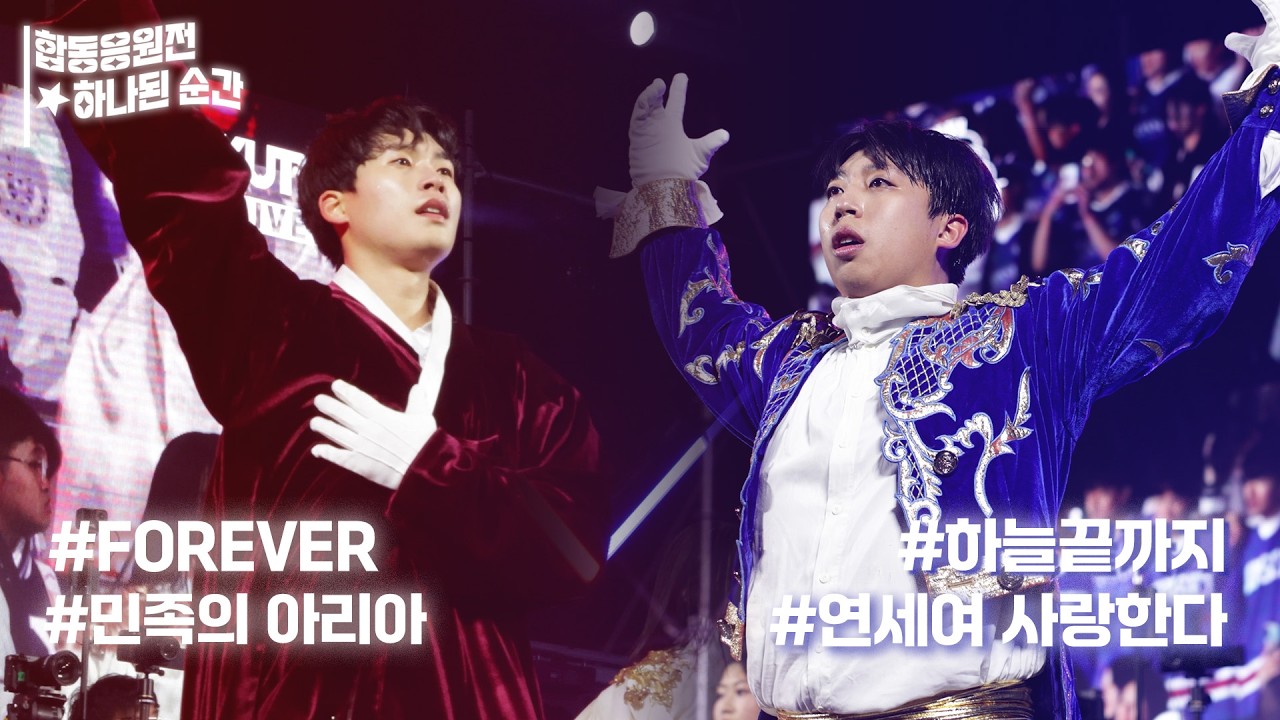
![[2026 Korea Univ. & Yonsei Univ. Joint Cheering Festival] The Best Cheer Songs of Both Universities: 'Aria of the Nation vs. I Love You, Yonsei' #고려대학교응원단 #연세대학교응원단 #합응 #떼창 #고려대 #연세대 [4K60P]](https://i.ytimg.com/vi/v4mp82NpLyk/maxresdefault.jpg)
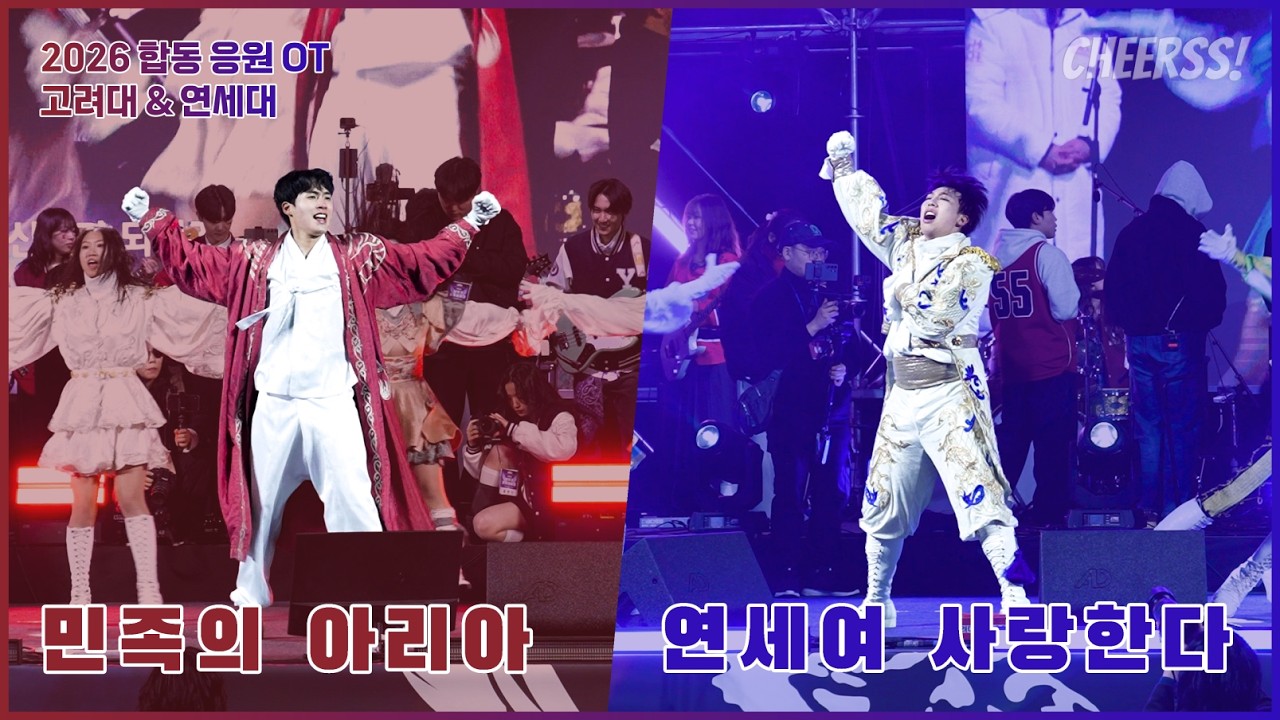
![[AI] Yonsei-Korea / Korea-Yonsei Games Cheering Song | Piano cover](https://i.ytimg.com/vi/-sd-pbUFz94/maxresdefault.jpg)
![Waterbomb Joint Cheering 2025! 'Aria of the Nation(KU) vs I Love You, Yonsei(YU)' I 2025 Annual Korea-Yonsei Games Joint Cheering OT #합응 #합동응원 #2025합응 [4k60p]](https://i.ytimg.com/vi/j3BQ_3NDQpc/maxresdefault.jpg)

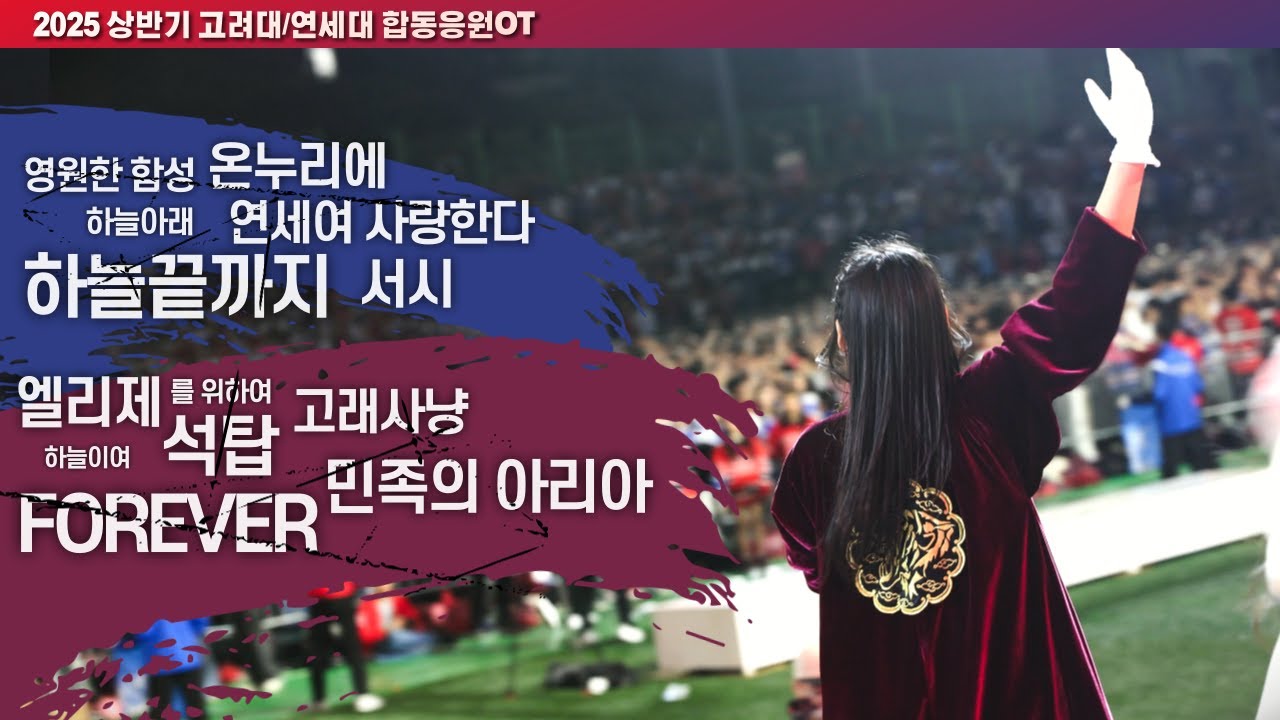
![2025.03.14 Joint Cheering OT [I Love You Yonsei + Aria of the Nation] #연세대학교응원단 #고려대학교응원단 #떼창 #yonseiuniversity #koreauniversity](https://i.ytimg.com/vi/4m1kambe9ig/maxresdefault.jpg)
![[2025 Korea University & Yonsei University Joint Cheering] Both Universities Sing Together 'Yonsei, I Love You (YU) vs Aria of the Nation (KU)' #합응 #연세대응원가 #고려대응원가](https://i.ytimg.com/vi/uazFj9ZYjPE/maxresdefault.jpg)
Recommended Videos
News![[AI] Yonsei-Korea Games Cheering Songs | Forever, To the End of the Sky, Yonsei, I Love You, Aria of the Nation (Musical ver.)](https://i.ytimg.com/vi/kjcC1BfaWok/maxresdefault.jpg)
![[AI] Yonsei-Korea / Korea-Yonsei Cheer Songs | Boat Song, Aria of the Nation, I Love You Yonsei (Jazz ver.)](https://i.ytimg.com/vi/ZMEAno5uxkg/maxresdefault.jpg)
![[AI] Yonsei-Korea / Korea-Yonsei Cheering Songs | Aria of the People, I Love Yonsei (Rock ver.)](https://i.ytimg.com/vi/Ojlyj9ZwlBA/maxresdefault.jpg)
![Joint cheering highlights that turned heavy rain into Waterbomb. Korea Univ/Yonsei Univ cheering song exchange 'Love Goyeonga + I Love Yonsei + To the End of the Sky + Aria of the People' #합응 #합동응원 #응원OT [4k]](https://i.ytimg.com/vi/GK8HmkKxEno/maxresdefault.jpg)

![[2024 Korea Univ/Yonsei Univ Joint Cheering OT] 'I Love You, Yonsei vs Aria of the Nation' - Korea Univ Cheering Song / Yonsei Univ Cheering Song / Joint Cheering](https://i.ytimg.com/vi/jRTyQuwMTX0/maxresdefault.jpg)
![[2023 Joint Cheering Festival] Yon-Ko Games Eve 🔥 | Aria of the Nation 🐅 VS Prelude 🦅](https://i.ytimg.com/vi/9lRrrcyb0VM/maxresdefault.jpg)
![[Korea-Yonsei Games][Yonsei-Korea Games] Korea University Yonsei University Cheering Battle 👍👍👍👍👍](https://i.ytimg.com/vi/FHrpI9szBo8/maxresdefault.jpg)