Seoraksan
🎬 Watch videosSeoraksan — Korea's Most Dramatic Mountain
Ask Koreans for one mountain to visit, and Seoraksan often wins the vote. Granite peaks, deep valleys, autumn foliage — everything about Korea's mountain scenery, in one place. For foreign travelers, no place shows you "what Korean nature actually looks like" quite like Seoraksan.
What kind of mountain
A national park stretching across Sokcho, Inje, and Yangyang in Gangwon Province. Highest peak: Daecheongbong (1,708 m). Korea's third-tallest mountain, but the scenic density is the highest. The name Seorak (雪嶽) means "snowy peak" — winter snowscapes are equally amazing.
Courses — split by fitness and time
🟢 Beginner (half day, cable car + walk)
- Gwongeumseong Cable Car — about 5 minutes from the Outer Seorak entrance to Gwongeumseong. Outer Seorak ridges plus Sokcho downtown and the sea in one view. Round trip around 15,000 won.
- Sinheungsa Temple + Biryong / Towangseong Falls overlook — flat forest path. Sneakers OK. 2–3 hours of easy walking.
- Heundeulbawi (Rocking Rock) — an easy landmark without using the cable car.
🟡 Intermediate (half day to most of a day)
- Biseondae → Yangpok → Cheonbuldong Valley — climbing along the Outer Seorak valley. The #1 spot for autumn foliage.
- Ulsanbawi (Ulsan Rock) — a granite mega-rock. 800 iron stairs at the top. Round trip 5–6 hours.
🔴 Advanced (summit, full day)
- Osaek → Daecheongbong → Jungcheong Shelter — shortest summit course. 8–10 hour round trip. Steep.
- Hangye-ryeong → Daecheongbong → Osaek traverse — serious traverse, advance prep required.
Getting there
- Seoul → Sokcho: intercity bus about 2.5 hours (Dong Seoul Terminal or Seoul Express Bus Terminal). A KTX line is planned soon.
- Sokcho → Seoraksan entrance: city bus 7 or 7-1, about 25 min.
- Rental car: easiest. Different entrances via Hangye-ryeong, Misiryeong, or Daecheongbong parking lots.
Pair with nearby — Sokcho is the base
- Sokcho Central Market — dakgangjeong (sweet-spicy fried chicken) at Mansok or Jungang, snow crab, frozen pollack noodle soup
- Lake Cheongchoho / Yeonggeumjeong — city seafront walk
- Abai Village — Hamhung naengmyeon, abai sundae, and the small "gaetbae" boat crossing
- Yangyang Jukdo Beach — surfing (summer)
- Naksansa Temple — a cliffside temple on the East Sea. Good pairing with Seoraksan.
Season by season — autumn is legendary
- 🌸 Spring (May) — fresh leaves, smaller crowds
- ☀️ Summer — cool valleys around Cheonbuldong and Baekdamsa. Heavy rain warnings possible.
- 🍁 Autumn (mid–late October) — Korea's #1 foliage spot. Outer Seorak peaks in the last week of October; the most crowded week of the year. Book hotels a month ahead.
- ❄️ Winter (Dec–Feb) — snowscapes. Some ridge courses close. The cable car + Gwongeumseong course is the safe option.
Food
- Tofu village at the entrance — makgeolli and tofu after the hike
- Sokcho dakgangjeong — the market's specialty. Worth the queue.
- Sashimi and mulhoe — at Sokcho Port and Dongmyeong Port
- Buckwheat noodles / makguksu — Gangwon's signatures
Honest tips
- If you can choose only one week — go in peak foliage week. Seoraksan is great in other seasons but autumn is on another level.
- Peak foliage weekends mean lines for hotels, cable cars, and restaurants. Visit on weekdays.
- The cable car closes in heavy fog or strong wind — sometimes you arrive and can't ride.
- Outer Seorak (Sokcho side) and Inner Seorak (Inje side) feel different. If time allows, do both.
- Signage and shuttles are bilingual (Korean/English). Park office is Korean-first — knowing a few simple phrases helps.
Visitor info
- Admission: free (national park)
- Recommended length: 1 night, 2 days (Sokcho as base)
- Official: knps.or.kr (Seoraksan)
🗺 Map
Today's Videos
News
#KoreaTravel #koreatravel Gangwon-do #SokchoAttractions #sokcho Seoraksan at a glance #mountains and #sea


Seoraksan Autumn Foliage Spot: Most Popular Easy Barrier-Free Hiking Trail, Free Parking Tips / This Year's Peak Foliage?
![Vibrant Seoraksan Mountain with peak autumn foliage... crowded with hikers [9 O'clock News] / KBS 2025.10.26.](https://i.ytimg.com/vi/M75xRh8hk-8/hqdefault.jpg)


Seoraksan Autumn Foliage 4K Drone! The Majesty of Korea's Famous Mountain, First to Blaze Up 🍁
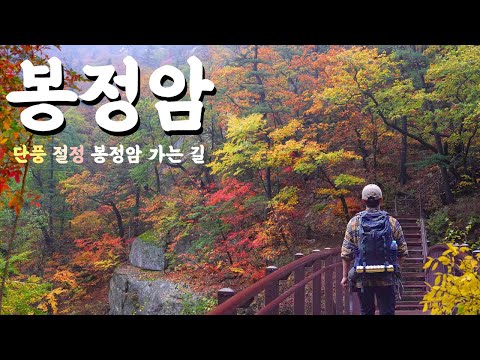

Seoraksan Bongjeongam Pilgrimage Hike: The Complete Guide! From Public Transport to Detailed Course Info!
![Seoraksan's Peak Autumn Foliage 🍂 Bongjeongam Seen from the Sky [Sky Scene]](https://i.ytimg.com/vi/MZOrqinfLJE/hqdefault.jpg)


Seoraksan⛰️ Dinosaur Ridge Peak Fall Foliage🍁 | Osaek-Dinosaur Ridge-Sogongwon 20km Public Transport for Vehicle Retrieval

Seoraksan autumn foliage viewing 'traffic hell'... There was a reason / SBS
Recommended Videos
News
Mountains full of red leaves, ridges packed with hikers... Seoraksan autumn foliage at its peak / SBS